
For much of the year, the idea of installing air conditioning in a London home sits somewhere on the list of things to look into rather than something that gets done. Then April arrives, the first warm days of spring appear, and the memory of last summer’s heat comes back sharply enough to turn a vague intention into a genuine enquiry.
The good news is that April is actually the right time to act. Engineer availability is better than it will be in June or July, lead times on equipment are shorter, and the installation can be completed and tested before the weather genuinely requires it. This guide covers what a domestic air conditioning installation involves, what affects the cost, and what homeowners in West London need to know before booking.
How Domestic Air Conditioning Works in a UK Home
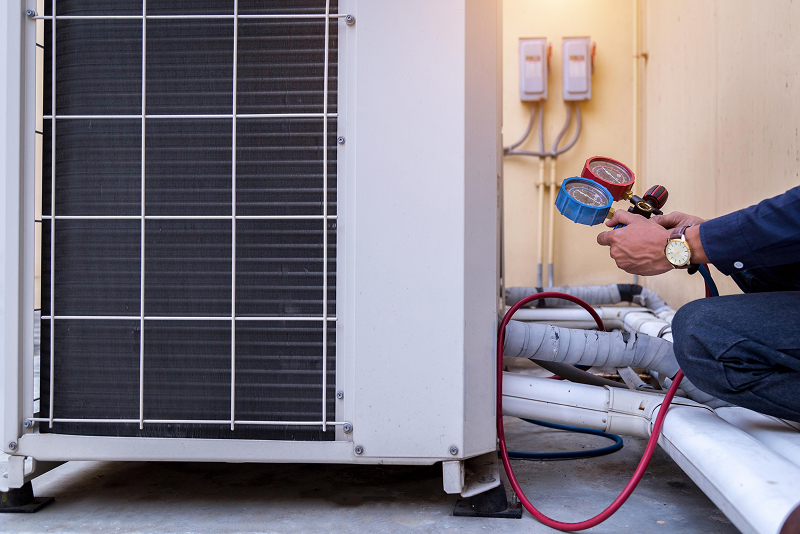
The most common type of air conditioning installed in UK homes is a split system, which consists of two units: an indoor unit mounted on a wall inside the room and an outdoor unit fixed to an external wall or on a flat roof or patio. The two are connected by refrigerant pipework and electrical cabling that runs through a small hole in the external wall.
The indoor unit draws warm air from the room, passes it over a cooling coil, and returns it to the room at a lower temperature. The heat extracted from the room is transferred to the outdoor unit and released outside. The process is efficient, relatively quiet when running correctly, and does not require any changes to the building’s existing heating system.
Most modern split systems also work in reverse as a heat pump, providing warmth in winter as well as cooling in summer. This makes them a genuinely year-round appliance rather than a seasonal one, and for rooms that receive a lot of sun or are particularly difficult to heat in winter, the dual function is a significant advantage.
What the Installation Process Involves
For a homeowner booking a domestic air conditioning installation for the first time, understanding the process ahead of the visit helps avoid surprises.
The first step is a survey. Before any equipment is ordered or installation dates confirmed, an engineer will assess the room or rooms to be cooled, identify the best position for the indoor unit, establish the most practical route for the pipework to the outside, and confirm where the outdoor unit will be positioned. The survey also establishes the correct size of unit for the space, which is important. An undersized unit will struggle to cool the room in high temperatures; an oversized unit will cycle on and off too frequently and run inefficiently.
Once the survey is complete and the equipment has been ordered, the installation itself typically takes between half a day and a full day for a single room system. The engineer will mount the indoor unit, position the outdoor unit, run the pipework and cabling between the two, commission the system, and test it before leaving. The hole through the external wall is sealed and finished neatly as part of the installation.
Planning Permission and Building Regulations
For most domestic installations in standard residential properties, planning permission is not required. Air conditioning outdoor units are generally considered permitted development, provided they meet certain conditions around size, positioning, and noise output.
There are exceptions worth being aware of. Properties in conservation areas, listed buildings, and some flats or leasehold properties may have restrictions that affect what can be installed and where. If the property falls into any of these categories, it is worth checking with the local authority or a managing agent before proceeding. West London Plumbing can advise on this during the survey visit.
What Affects the Cost of Installation
The cost of a domestic air conditioning installation varies depending on several factors, and the range of prices quoted online is wide enough to be confusing without some context.
The size and specification of the unit is the most significant variable. A basic single-room split system from a mid-range manufacturer will cost less than a premium unit from a brand such as Mitsubishi or Daikin, which sits at the higher end of the domestic market in terms of efficiency ratings, noise levels, and longevity.
The complexity of the installation affects the price as well. A ground-floor installation where the outdoor unit can be positioned close to the indoor unit with a short, accessible pipework run is more straightforward than an installation on an upper floor where the pipework needs to travel a significant distance or pass through awkward spaces. Properties with solid walls rather than cavity walls also require more effort for the core drilling work.
Multi-room systems, where a single outdoor unit serves two or more indoor units in different rooms, are more expensive than single-room installations but are more cost-effective than installing separate systems for each room and require only one outdoor unit on the external wall.
Why April Is the Right Time to Book
By June and July, air conditioning engineers across London are fully booked. The combination of new installations, service calls on existing systems, and emergency repair jobs during hot weather means that anyone trying to book an installation during a heatwave is likely to be told the earliest available date is weeks away.
Booking in April avoids that entirely. Equipment lead times are shorter, engineers have more flexibility in their schedules, and the installation can be completed and fully tested before it is needed. There is also time to resolve any issues that arise during commissioning without the pressure of relying on the system in the middle of a hot spell.
For homeowners who have been thinking about air conditioning since last summer, April is the point at which acting on it costs the least effort and delivers the most comfort before the warmest months arrive.
Finance Options for Air Conditioning Installation
For homeowners who would prefer not to pay for the installation in a single upfront amount, West London Plumbing offers 0% interest free credit on qualifying installations, allowing the cost to be spread across manageable monthly payments. The same finance arrangement available on boiler installations applies to air conditioning, making it straightforward to get the system installed now and spread the cost over time.
Get a Quote for Air Conditioning Installation in West London
If you are considering air conditioning for your home and would like to understand the costs and options before making a decision, the West London Plumbing team is happy to help. We carry out domestic and commercial air conditioning installations across all W and TW postcodes, and our engineers can visit for a survey and provide a fixed-price quote with no obligation.
Visit our air conditioning services page for full details of the systems we install and the brands we work with. For homeowners who would like to spread the cost, our 0% finance page has full details of how the payment option works. To book a survey or get in touch with a question, call us on 020 3561 4415 or contact us online and we will come back to you promptly.