Author: SEO Nera

How to Find a Water Leak in Your Home Before It Gets Worse

Water leaks are rarely dramatic to begin with. The burst pipe that floods a room overnight is the exception rather than the rule. Far more commonly, a leak develops slowly and quietly inside a wall, under a floor, or within the pipework that runs through a property. By the time it becomes visible, the damage has usually been building for weeks or months.

The good news is that most leaks give off warning signs before they become a serious problem. Knowing what to look for, where to look, and when the situation has moved beyond what a homeowner can investigate themselves is genuinely useful knowledge for anyone living in an older London property. This guide covers all three.

Signs That You May Have a Hidden Water Leak

The most reliable early indicator of a hidden leak is an unexplained increase in your water bill. If your usage habits have not changed but your bill has risen noticeably, water is going somewhere it should not be. This is worth taking seriously even if everything inside the property looks normal, because many leaks occur in pipework that is buried in walls or beneath floors where there is nothing visible to find.

A drop in water pressure that appears gradually rather than suddenly is another sign worth investigating. If your shower or taps feel noticeably weaker than they used to without any obvious explanation such as a pressure issue from the mains supply, a leak somewhere in the system may be the cause.

Damp patches on walls, ceilings, or floors that appear without a clear explanation are a more obvious indicator. Patches that grow slowly over time, walls that feel cold or soft to the touch, or paint and plaster that begins to bubble or flake can all point to water behind the surface. Similarly, a persistent musty smell in a room or cupboard that does not go away with ventilation can indicate moisture accumulating somewhere that is not drying out.

In properties with solid floors, a warm patch underfoot can occasionally indicate a leak from an underfloor heating pipe or a hot water supply pipe buried in the slab. This is less common but worth mentioning because it is easy to dismiss as a draught or an odd characteristic of the property.

Where Leaks Most Commonly Occur

Understanding where leaks tend to happen helps narrow down where to focus attention when something seems wrong.

Joints and connections are the most common source of leaks in domestic pipework. Over time, fittings can work loose, seals can deteriorate, and the natural movement of pipes as they expand and contract with temperature changes can cause connections to develop small gaps. These leaks are often very slow initially but worsen over time.

The area around baths, showers, and basins is another common location. Sealant around these fixtures has a limited lifespan, and once it begins to crack or pull away from the surface, water can work its way behind tiles and into the wall or floor structure with each use. This type of leak is particularly common in bathrooms that have not been resealed for several years.

Older properties across West London frequently have pipework made from lead or iron, both of which are more prone to corrosion and pinhole leaks than modern copper or plastic alternatives. If the property has not had its pipework updated in several decades, older materials may be part of the picture.

The cold water storage tank, where one is fitted in the loft, is worth checking if there is any sign of damp coming through an upper ceiling. Tanks can develop hairline cracks, and the overflow pipe is sometimes the first indication that something is wrong when water starts running down the outside of the building.

Simple Checks You Can Do Yourself

Before calling an engineer, there are a couple of straightforward checks that can help establish whether a leak is present and roughly where it might be.

The meter test is the most reliable DIY check for a supply pipe leak. Turn off all taps and water-using appliances in the property, then locate your water meter and note the reading. Leave everything off for at least an hour without using any water, then check the meter again. If the reading has changed, water is being used somewhere, which points to a leak on the supply side rather than an internal pipe.

Checking the stopcock is also worth doing if you have not tested it recently. The stopcock controls the flow of water into the property, and one that is partially stuck open or leaking at the valve itself is occasionally the source of an otherwise unexplained damp patch near the kitchen sink or utility room where it is typically located.

Beyond these basic checks, further investigation starts to require equipment and expertise that most homeowners do not have. Leak detection in walls and floors, tracing supply pipe routes, and identifying the source of a slow leak without causing unnecessary damage to the property are jobs that benefit significantly from professional tools and experience.

When to Call a Professional Leak Detection Service

There is a point at which continuing to investigate a suspected leak without professional help risks causing more damage than the leak itself. Opening up walls or floors without being certain of where the leak is wastes time, creates additional repair work, and in some cases fails to find the source at all.

Professional leak detection uses a range of non-invasive methods to locate the source of a leak before any opening up is required. Acoustic listening equipment can detect the sound of water escaping from a pressurised pipe through walls and floors. Thermal imaging identifies temperature differences caused by wet or damp areas inside a structure. Tracer gas can be used to locate leaks in buried supply pipework by introducing a detectable gas into the pipe and identifying where it escapes.

These methods allow an engineer to identify the location and likely source of a leak accurately before any remedial work begins, which significantly reduces the disruption and cost involved in fixing it. West London Plumbing provides professional leak detection across all W and TW postcodes, with engineers equipped to carry out a thorough investigation and advise on the repair once the source has been found.

Acting Quickly Matters

The reason it is worth taking suspected leaks seriously early, rather than waiting to see whether the situation resolves itself, is that water damage compounds over time. A slow leak that has been present for several months will have caused considerably more damage to the surrounding structure than one that was caught and dealt with quickly.

Insurance claims for water damage are among the most common and costly in UK domestic property. Many policies require the homeowner to take reasonable steps to prevent further damage once a problem is known, which means ignoring a suspected leak and hoping it goes away is not a position that insurers look favourably on if a claim is eventually needed.

Catching a leak early, getting it located accurately, and having the repair carried out properly the first time is almost always less expensive and less disruptive than dealing with the consequences of leaving it.

Get Help With Leak Detection in West London

If you have noticed any of the signs described above or have reason to suspect a leak somewhere in your property, the West London Plumbing team can help. Our engineers carry out professional leak detection across all W and TW postcodes and can investigate both visible and hidden leaks with minimal disruption to the property.

Visit our leak detection page for full details of the methods we use and the types of leak we investigate. If the investigation identifies a repair that needs carrying out, our plumbing team can handle that as well, so there is no need to manage multiple contractors. To book a visit or discuss what you have noticed, call us on 020 3561 4415 or contact us online and we will arrange an appointment at a time that suits you.
Air Conditioning Installation for London Homes: What to Expect

For much of the year, the idea of installing air conditioning in a London home sits somewhere on the list of things to look into rather than something that gets done. Then April arrives, the first warm days of spring appear, and the memory of last summer’s heat comes back sharply enough to turn a vague intention into a genuine enquiry.

The good news is that April is actually the right time to act. Engineer availability is better than it will be in June or July, lead times on equipment are shorter, and the installation can be completed and tested before the weather genuinely requires it. This guide covers what a domestic air conditioning installation involves, what affects the cost, and what homeowners in West London need to know before booking.

How Domestic Air Conditioning Works in a UK Home

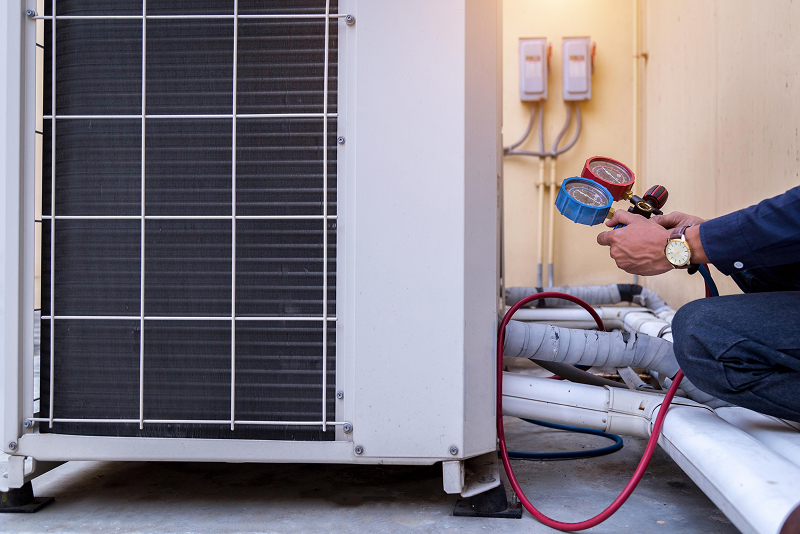
The most common type of air conditioning installed in UK homes is a split system, which consists of two units: an indoor unit mounted on a wall inside the room and an outdoor unit fixed to an external wall or on a flat roof or patio. The two are connected by refrigerant pipework and electrical cabling that runs through a small hole in the external wall.

The indoor unit draws warm air from the room, passes it over a cooling coil, and returns it to the room at a lower temperature. The heat extracted from the room is transferred to the outdoor unit and released outside. The process is efficient, relatively quiet when running correctly, and does not require any changes to the building’s existing heating system.

Most modern split systems also work in reverse as a heat pump, providing warmth in winter as well as cooling in summer. This makes them a genuinely year-round appliance rather than a seasonal one, and for rooms that receive a lot of sun or are particularly difficult to heat in winter, the dual function is a significant advantage.

What the Installation Process Involves

For a homeowner booking a domestic air conditioning installation for the first time, understanding the process ahead of the visit helps avoid surprises.

The first step is a survey. Before any equipment is ordered or installation dates confirmed, an engineer will assess the room or rooms to be cooled, identify the best position for the indoor unit, establish the most practical route for the pipework to the outside, and confirm where the outdoor unit will be positioned. The survey also establishes the correct size of unit for the space, which is important. An undersized unit will struggle to cool the room in high temperatures; an oversized unit will cycle on and off too frequently and run inefficiently.

Once the survey is complete and the equipment has been ordered, the installation itself typically takes between half a day and a full day for a single room system. The engineer will mount the indoor unit, position the outdoor unit, run the pipework and cabling between the two, commission the system, and test it before leaving. The hole through the external wall is sealed and finished neatly as part of the installation.

Planning Permission and Building Regulations

For most domestic installations in standard residential properties, planning permission is not required. Air conditioning outdoor units are generally considered permitted development, provided they meet certain conditions around size, positioning, and noise output.

There are exceptions worth being aware of. Properties in conservation areas, listed buildings, and some flats or leasehold properties may have restrictions that affect what can be installed and where. If the property falls into any of these categories, it is worth checking with the local authority or a managing agent before proceeding. West London Plumbing can advise on this during the survey visit.

What Affects the Cost of Installation

The cost of a domestic air conditioning installation varies depending on several factors, and the range of prices quoted online is wide enough to be confusing without some context.

The size and specification of the unit is the most significant variable. A basic single-room split system from a mid-range manufacturer will cost less than a premium unit from a brand such as Mitsubishi or Daikin, which sits at the higher end of the domestic market in terms of efficiency ratings, noise levels, and longevity.

The complexity of the installation affects the price as well. A ground-floor installation where the outdoor unit can be positioned close to the indoor unit with a short, accessible pipework run is more straightforward than an installation on an upper floor where the pipework needs to travel a significant distance or pass through awkward spaces. Properties with solid walls rather than cavity walls also require more effort for the core drilling work.

Multi-room systems, where a single outdoor unit serves two or more indoor units in different rooms, are more expensive than single-room installations but are more cost-effective than installing separate systems for each room and require only one outdoor unit on the external wall.

Why April Is the Right Time to Book

By June and July, air conditioning engineers across London are fully booked. The combination of new installations, service calls on existing systems, and emergency repair jobs during hot weather means that anyone trying to book an installation during a heatwave is likely to be told the earliest available date is weeks away.

Booking in April avoids that entirely. Equipment lead times are shorter, engineers have more flexibility in their schedules, and the installation can be completed and fully tested before it is needed. There is also time to resolve any issues that arise during commissioning without the pressure of relying on the system in the middle of a hot spell.

For homeowners who have been thinking about air conditioning since last summer, April is the point at which acting on it costs the least effort and delivers the most comfort before the warmest months arrive.

Finance Options for Air Conditioning Installation

For homeowners who would prefer not to pay for the installation in a single upfront amount, West London Plumbing offers 0% interest free credit on qualifying installations, allowing the cost to be spread across manageable monthly payments. The same finance arrangement available on boiler installations applies to air conditioning, making it straightforward to get the system installed now and spread the cost over time.

Get a Quote for Air Conditioning Installation in West London

If you are considering air conditioning for your home and would like to understand the costs and options before making a decision, the West London Plumbing team is happy to help. We carry out domestic and commercial air conditioning installations across all W and TW postcodes, and our engineers can visit for a survey and provide a fixed-price quote with no obligation.

Visit our air conditioning services page for full details of the systems we install and the brands we work with. For homeowners who would like to spread the cost, our 0% finance page has full details of how the payment option works. To book a survey or get in touch with a question, call us on 020 3561 4415 or contact us online and we will come back to you promptly.

What to do when your central heating stops working in London

What to do when your central heating stops working in London


When your central heating stops working, it tends to happen at the worst possible time. Cold mornings, late evenings, or during a drop in temperature when you rely on it the most.

For many households in London, heating issues can quickly become uncomfortable and sometimes urgent. Understanding what to check first and when to call for professional help can save both time and unnecessary stress.

This guide walks through the practical steps you can take and explains when emergency central heating repairs in London are needed.

Start with the obvious checks

Before assuming a major fault, it’s worth checking a few basic things. Heating systems can stop working for simple reasons that are easy to overlook.

Take a moment to check:

  • Your thermostat settings and schedule
  • Whether the boiler has power
  • If the timer or programmer is set correctly
  • Radiator valves are open
  • The system pressure is within the correct range

Sometimes a small adjustment is all that’s needed. A thermostat accidentally set too low or a timer switched off can easily be mistaken for a system failure.

When the problem affects only part of the system

Not all heating issues mean a full breakdown.

If some radiators are working and others are not, the issue may be more localised. In these situations, the system itself is still functioning, but distribution is uneven.

You might notice:

  • Cold spots on radiators
  • One room staying cold while others heat up
  • Radiators taking longer to warm up

This often points to trapped air or sludge build-up. Bleeding radiators can sometimes resolve the issue, but if the problem continues, it may require a deeper system clean or inspection.

Signs you may need central heating repairs

There are certain signs that suggest the issue is more than a quick fix.

These include unusual behaviour or changes in how your system normally operates.

Warning signs to watch for

  • Loud banging or knocking noises
  • Water leaks around pipes or radiators
  • Boiler switching off unexpectedly
  • Heating that comes and goes
  • Sudden drops in pressure

These symptoms usually indicate underlying faults that need professional attention.

Ignoring them can lead to more serious damage over time.

Emergency central heating repairs in London

In some cases, waiting is not an option.

If your heating fails completely during colder weather, or if there is a safety concern such as a leak, it becomes an urgent situation.

Emergency central heating repairs in London are designed to deal with these situations quickly.

Typical emergency scenarios include:

  • Total loss of heating during winter
  • Active water leaks that could damage property
  • Boiler or system failure affecting vulnerable occupants
  • Repeated system shutdowns with no clear cause

In these situations, a fast response helps prevent further issues and restores comfort sooner.

What happens during a repair visit

If you need to call an engineer, it helps to know what to expect.

A professional heating engineer will usually begin with a full system check. This allows them to identify the root cause rather than just treating the symptom.

The visit may involve:

  • Inspecting the boiler and controls
  • Checking pressure and circulation
  • Testing radiators and pipework
  • Identifying faulty components

Some repairs can be completed immediately, while others may require parts to be ordered. Either way, the system will be made safe and stabilised during the visit.

Avoid common mistakes during a breakdown

When heating stops working, it’s natural to try and fix it quickly. However, certain actions can make the situation worse.

It’s best to avoid:

  • Repeatedly resetting the boiler
  • Adjusting internal components
  • Ignoring leaks or unusual smells
  • Using the system if it appears unsafe

Heating systems are complex and involve both water pressure and gas components. A cautious approach is always safer.

The role of regular maintenance

Many central heating issues build up over time rather than appearing suddenly.

Regular maintenance helps catch these early signs before they turn into full breakdowns.

A routine service allows engineers to:

  • Identify worn components
  • Clean internal parts
  • Check system pressure and performance
  • Ensure safe operation

Homeowners who maintain their systems consistently tend to experience fewer emergency callouts.

If you want to keep your system running efficiently, working with a trusted plumbing and heating london service can help ensure everything stays in good condition.

Common causes of heating system failure

Heating systems can fail for a variety of reasons, and often it’s a combination of factors rather than a single issue.

Some of the most common causes include:

  • Air trapped in radiators
  • Sludge or debris in the system
  • Faulty thermostats or controls
  • Pump or valve failures
  • Low or fluctuating pressure

Understanding these causes makes it easier to recognise when something is not quite right.

How quickly can repairs be completed?

Repair times vary depending on the issue.

Minor problems such as pressure adjustments or thermostat faults can often be resolved during the first visit. More complex issues may require additional parts or follow-up work.

The priority is always to restore heating safely and efficiently.

In emergency situations, most services aim to respond quickly and provide an immediate assessment.

Planning ahead can reduce future disruption

Once your heating is back up and running, it’s worth thinking about how to avoid the same issue in the future.

Simple steps can make a noticeable difference:

  • Schedule regular servicing
  • Pay attention to early warning signs
  • Avoid ignoring small faults
  • Keep contact details of a reliable engineer

Preparation helps reduce downtime and ensures you are not left searching for help when you need it most.

Keeping your home warm and reliable

Central heating is something most people don’t think about until it stops working.

When it does, having a clear plan makes the situation easier to manage. Knowing what to check, when to call for help, and how to maintain your system helps avoid unnecessary stress.

Reliable central heating repairs in London are about more than fixing faults. They are about keeping your home comfortable and safe all year round.

Need central heating repairs in London?

If your heating system has stopped working or is showing signs of a fault, our experienced team is here to help.

We provide fast and reliable support across London, including emergency central heating repairs when you need them most.

Get in touch with our trusted plumbing and heating london specialists today and restore warmth to your home quickly and safely.

Why Spring Is the Best Time to Book a Boiler Service in London

West London Plumbing Ltd

Ask most homeowners when they last had their boiler serviced and the answer tends to follow a pattern. Either it was done in September or October before the cold weather arrived, or it has not been done in a while and there is a vague intention to sort it out before next winter. Both approaches are understandable, but neither is actually the best way to manage a boiler.

Spring is the smarter time to book. Not because of any technical requirement tied to the season, but because of the practical advantages it offers and what a properly timed service actually protects. This post explains the reasoning and what a Gas Safe engineer looks for during an annual boiler service in West London.

What an Annual Boiler Service Actually Involves

There is a widespread misconception that a boiler service is something that only matters when the boiler is showing signs of trouble. In reality, a service is a preventative visit, not a reactive one. The point is to identify small issues before they become faults, and to keep the boiler running at the efficiency and safety level it was designed to achieve.

During a standard service, a Gas Safe registered engineer will remove the boiler casing and inspect the internal components. The heat exchanger, burner, ignition electrodes, flue, seals, and controls are all checked. The engineer will clean any components where build-up has occurred, test the gas pressure and flow rate, verify that the safety controls are working correctly, and confirm that combustion is performing within the expected parameters.

Any signs of wear, corrosion, or deterioration are noted. Minor issues can often be addressed on the same visit. More significant problems will be flagged so the homeowner can make an informed decision about repair or, in some cases, replacement before the next heating season begins.

The whole process typically takes between 45 minutes and an hour and a half, depending on the age and condition of the boiler.

The Problem With Servicing in Autumn

Autumn servicing has become the default for most households simply because it feels like the logical thing to do before the heating goes back on. The logic makes sense on the surface. But in practice, it creates a concentration of demand that works against homeowners.

By September and October, engineers across West London are busy. Boilers that have been sitting idle through summer start showing faults as soon as they are needed again, and the combination of reactive repairs and pre-winter service bookings stretches availability considerably. Waiting times increase, appointments become harder to fit around work and family commitments, and the urgency of the autumn period can mean less time is available for a thorough job.

There is also a timing issue with any faults that are found. A service carried out in October that identifies a component needing replacement leaves very little time to source parts and complete the repair before the heating season is underway. A service carried out in March or April, on the other hand, leaves a comfortable window of several months to deal with anything that comes up without any pressure.

Why Spring Servicing Makes More Practical Sense

The end of the heating season in spring is actually the ideal moment to assess the boiler’s condition, for a straightforward reason: the boiler has just completed its most demanding period of the year. Any wear that has accumulated over winter will be visible to an engineer now in a way that it would not be after several months of summer inactivity.

Booking a service in March or April means the boiler is inspected while the evidence of the winter’s work is still fresh. Components that are beginning to show fatigue after months of daily use can be identified and addressed before they deteriorate further over the summer and become a fault in November. The boiler then sits in good condition through the warmer months and comes back into full use in autumn already ve

Landlord Gas Safety Certificates in London: What You Need to Know in 2026

If you rent out a property in London, arranging a gas safety inspection every year is not optional. It is a legal requirement under the Gas Safety (Installation and Use) Regulations 1998, and failure to comply carries serious consequences for landlords, including fines, prosecution, and the loss of the right to serve a Section 21 notice to regain possession of the property.

Despite how long this legislation has been in place, there is still a surprising amount of confusion among landlords about exactly what the certificate covers, how often it needs to be renewed, and what their responsibilities are toward tenants. This guide sets out the answers clearly so that landlords across West London know where they stand.

What Is a CP12 Gas Safety Certificate?

The CP12 is the document issued to a landlord following a successful gas safety inspection carried out by a Gas Safe registered engineer. It records the date of the inspection, the address of the property, the engineer’s Gas Safe registration number, and the results of the checks carried out on each gas appliance and fitting in the property.

The inspection itself covers every gas appliance the landlord is responsible for providing, which typically includes the boiler, gas hob, gas fire, and any other fixed gas appliances. The engineer checks that each appliance is operating safely, that flues and ventilation are adequate, that there are no unsafe gas pressures or flow rates, and that there is no evidence of unsafe installation or deterioration.

It is worth being clear about what the CP12 does not cover. It is a safety inspection, not a service. A gas safety check confirms that the appliances are safe to use. It does not involve cleaning, adjusting, or maintaining the boiler in the way that an annual boiler service does. Landlords who want their boiler to perform well and last longer should arrange a separate annual service in addition to the safety inspection, though the two can often be carried out at the same visit by the same engineer.

How Often Does a Landlord Need One?

A CP12 must be renewed every twelve months. There is no flexibility on this. The expiry date is printed on the certificate itself, and it is the landlord’s responsibility to ensure a new inspection is booked before that date passes.

The twelve-month clock starts from the date of the inspection, not the date the tenancy began or the date the certificate was issued. If an inspection takes place in February 2026, the next one must be completed before February 2027, regardless of whether the tenants change in the interim.

For new tenancies, the landlord must provide a copy of a valid gas safety certificate to the tenants before they move in. For existing tenancies, the certificate must be provided within 28 days of the inspection being completed. Landlords must also keep a record of each certificate for at least two years.

What Happens if You Do Not Have One?

The consequences of failing to hold a valid gas safety certificate are significant and worth understanding clearly.

Gas Safe Register and the Health and Safety Executive have powers to investigate landlords who are not compliant. An unlicensed or expired certificate can result in a fine of up to £6,000 per appliance. In cases where a gas incident occurs at a property without a valid certificate, the landlord can face criminal prosecution. Courts have handed down custodial sentences in serious cases.

Beyond the regulatory consequences, there is the impact on tenancy management to consider. A landlord who does not hold a valid gas safety certificate cannot serve a Section 21 notice to end an assured shorthold tenancy. Even if the certificate lapses by a single day between the inspection and being served to the tenant, that notice can be challenged and invalidated. This is a very common and costly mistake.

From an insurance perspective, many landlord policies include conditions around gas safety compliance. A claim arising from a gas incident at a property without a valid certificate could be refused entirely.

How Quickly Can a Certificate Be Arranged in London?

For landlords who are approaching a renewal date or who have recently taken on a new property, the process of arranging a CP12 in West London is straightforward. West London Plumbing carries out gas safety inspections across all W and TW postcodes, with Gas Safe registered engineers available for prompt appointments.

An inspection typically takes between 30 and 60 minutes depending on the number of appliances in the property. The certificate is issued following the inspection once the engineer has confirmed that all appliances meet the required safety standards. Where a fault or unsafe condition is identified during the inspection, the engineer will advise on what remedial work is needed before a certificate can be issued.

What If an Appliance Fails the Inspection?

If an appliance is found to be unsafe during the gas safety check, the engineer is required to take the appliance out of use and advise the landlord on the necessary repairs or replacement. A certificate cannot be issued until the issue has been resolved and a follow-up check confirms the appliance is now safe.

This is not a situation landlords need to fear, but it does underline the importance of not leaving the inspection until the last possible moment. Booking with enough lead time means that if a fault is identified and repair work is needed, there is time to deal with it before the certificate expires and before tenants are affected.

Boiler Servicing Alongside the Safety Check

Many landlords choose to have their boiler serviced at the same time as the gas safety inspection, and this is a sensible approach. Combining both visits means a single appointment for the engineer and a single disruption to the tenants rather than two separate visits.

An annual boiler service involves cleaning the internal components, checking the flue and seals, testing the controls, and identifying any early signs of wear that could develop into a fault later in the year. Keeping up with annual servicing also protects the manufacturer warranty on newer boilers and extends the working life of older units. West London Plumbing can carry out both the CP12 inspection and the boiler service in one visit across all West London postcodes.

Book Your CP12 Gas Safety Inspection in West London

If your gas safety certificate is due for renewal, or if you have recently taken on a tenanted property and need to get the paperwork in order, the West London Plumbing team can help. Our Gas Safe registered engineers work across all W and TW postcodes and can arrange inspections promptly to suit your schedule and your tenants.

Visit our landlord gas safety inspection page for full details of what the CP12 covers, or take a look at our gas safety certificate page for more information on what to expect from the process. To book an inspection or to discuss combining it with an annual boiler service, call us on 020 3561 4415 or contact us online and we will confirm availability the same day.

How Much Does a New Boiler Cost in London? A 2026 Guide

find the right boiler installation service london

For most homeowners, a new boiler is not a purchase they plan for. It tends to happen because the old one has broken down, is costing too much to keep repairing, or has simply reached the end of a useful life. Whatever the reason, the first question is almost always the same: how much is this going to cost?

The answer depends on several factors, and the range of prices quoted online can be confusing. This guide sets out what a realistic new boiler installation costs in London in 2026, what influences that price, and what options are available for those who would rather not pay for everything upfront.

What a New Boiler Installation Typically Costs in London

For a standard gas combi boiler installation in a typical London home, most homeowners can expect to pay somewhere between £1,800 and £3,500 for supply and installation combined. That figure covers a mid-range boiler from a reputable manufacturer, standard pipework connections, and removal of the existing unit.

At the lower end of that range you will find entry-level models installed in a straightforward location, such as a kitchen where the boiler is being replaced on a like-for-like basis with no significant pipework changes required. At the higher end you are looking at premium Worcester Bosch models, installations in more complex locations such as loft spaces or utility rooms, or situations where additional work is needed to bring the surrounding pipework up to standard.

Worcester Bosch boilers sit at a slightly higher price point than some alternatives, but they come with manufacturer guarantees of up to twelve years and have a strong reputation for reliability and parts availability. For most households in West London, they represent a sensible long-term investment rather than a luxury upgrade.

What Affects the Final Price

Beyond the boiler itself and the basic installation, there are a number of factors that can move the final price in either direction.

The location of the existing boiler matters. A straightforward replacement in the same position with no changes to flue position or pipework is the most cost-effective scenario. Moving the boiler to a different location, converting from a back boiler to a combi, or upgrading the flue to meet current regulations will all add to the total.

The age and condition of the surrounding pipework is another factor. Older properties in West London often have pipework that was installed decades ago and may need attention at the same time as the boiler itself. A Gas Safe engineer will flag any issues during the survey and include any necessary work in the quote.

System flushing is worth mentioning separately. If your heating system has accumulated sludge or scale over the years, a powerflush before the new boiler is installed is strongly recommended. Fitting a new boiler onto a dirty system shortens its life and can affect performance from the start. The cost of a powerflush varies depending on the size of the system but is a worthwhile addition rather than an afterthought.

Finally, the level of guarantee matters. Worcester Bosch offer guarantees of up to twelve years on their boilers when installed by an accredited installer. Choosing a manufacturer or installer that provides a shorter guarantee to bring the upfront cost down often means carrying more risk on an expensive piece of equipment.

The Case for Acting Sooner Rather Than Later

It is very common to keep an ageing boiler running on repairs rather than committing to a replacement. In many cases that makes sense, particularly if the boiler is relatively young and the fault is minor. But there is a point at which the repair costs, the reduced efficiency, and the reliability risk tip the balance in favour of replacement.

A boiler that is more than fifteen years old and has needed two or more significant repairs in recent years is probably costing more than it appears to on paper. Older boilers are less efficient than modern condensing models, which means higher gas bills every month. The gap in running costs between a twenty-year-old boiler and a current Worcester Bosch model can be meaningful over a full heating season.

There is also the risk of a complete failure in cold weather to consider. An emergency replacement in January, with no heating or hot water and a limited window of time to make a decision, is a more stressful and potentially more expensive situation than a planned installation booked at a convenient time.

Spreading the Cost With Boiler Finance

For homeowners who want a new boiler but would rather not pay the full amount upfront, a finance option makes the cost considerably more manageable. West London Plumbing offers 0% interest free credit on qualifying boiler installations, allowing the cost to be spread across monthly payments without any additional interest charge.

As an example, a typical installation financed over ten years comes to around £26 per month. That makes a new, fully guaranteed boiler with next-day installation accessible to households who cannot easily absorb a large upfront cost, particularly at a time of year when other household expenses are already elevated.

Finance applications are straightforward and can be completed quickly. A credit check is required, and a fourteen-day cooling off period applies to all agreements. The team at West London Plumbing can walk you through the options as part of the quotation process so you have a clear picture before making any commitment.

Get a Fixed-Price Quote for a New Boiler in London

If you are thinking about a new boiler or have been putting a replacement off for a while, the most useful first step is a no-obligation fixed-price quote. West London Plumbing provides same-day quotes across all W and TW postcodes, with next-day installation available on most Worcester Bosch models.

Visit our new boiler page for more information on the brands and models we install, or take a look at our boiler finance page if you would like to understand the payment options before getting in touch. To book a quote or speak to one of our engineers, call us on 020 3561 4415 or contact us online and we will get back to you the same day.

What to Do When Your Boiler Breaks Down in Winter

A boiler breakdown in winter is never just an inconvenience. When temperatures drop across West London and the heating stops working, the impact is immediate. Cold rooms, no hot water, and the stress of not knowing how long a fix will take. If you are in that situation right now, or you want to know what to do if it happens, this guide covers the practical steps from the moment the boiler goes off to getting a qualified engineer on the job.

Check the Basics Before Calling Anyone

Before picking up the phone, there are a few simple things worth checking. They will not fix a serious fault, but they can save you a call-out fee if the issue turns out to be something minor.

Start with your thermostat. If it is set below the current room temperature, the boiler will not fire. Turn it up a few degrees and wait a minute or two to see whether it kicks in. If you have a smart thermostat, check the app to confirm it is connected and the schedule is set correctly.

Next, check your boiler pressure gauge. Most combi boilers need a pressure reading between 1 and 1.5 bar when cold. If the needle has dropped below 1, low pressure could be preventing the boiler from running. Many boilers have a filling loop underneath that allows you to top up the pressure, and the process is usually described in the manual or on a label fixed near the unit. If you are not sure, leave it. A Gas Safe engineer can repressure the system as part of a visit without any risk of causing additional damage.

It is also worth checking your fuse box. A tripped switch can cut power to the boiler without any obvious signs that something has gone wrong. Flick the relevant switch back on and see whether the boiler resets. Finally, check whether your neighbours have heating. If there is a gas supply issue in your street, the problem will not be with your boiler at all.

Understand the Error Code on Your Display

Most modern boilers show a fault code on the display panel when something goes wrong. Worcester Bosch boilers, which are among the most common across West London, display codes such as EA that correspond to specific faults. If your boiler is showing a code, note it down before doing anything else. You can look it up in your manual or on the manufacturer’s website to get an idea of what has triggered it.

In many cases, a reset will clear a temporary fault. There is usually a reset button on the front panel, and holding it for a few seconds will attempt a restart. If the boiler fires up and runs normally, keep an eye on it over the next day or two. If the same fault code reappears shortly after, the underlying problem needs a proper diagnosis from an engineer rather than repeated resets.

When to Stop and Call an Engineer

There are certain situations where you should stop troubleshooting straight away and call a Gas Safe registered engineer.

If you can smell gas at any point, do not touch the boiler. Leave the property, call the National Gas Emergency Service on 0800 111 999, and wait for them to make the supply safe before anything else happens.

If the boiler is leaking water, turn the heating off and place a towel or container underneath to protect your flooring. Water leaks can come from several different components, and each has a different cause and repair. Attempting to investigate further without the right knowledge risks making things worse. A qualified engineer will be able to identify the source quickly and advise on the repair.

Unusual noises are another reason to stop and call rather than continue. Banging, clanking or a persistent kettling sound are signs of a mechanical problem or a build-up of scale and sludge in the system. Running a boiler while these noises are present can worsen the fault and increase the eventual repair cost significantly.

For anything beyond a pressure top-up or a thermostat check, a Gas Safe registered engineer is the right call. It is a legal requirement in the UK that gas work is carried out by registered engineers, and attempting repairs yourself will void most manufacturer warranties.

Why Winter Faults Need a Fast Response

In summer, a broken boiler is an inconvenience. In December and January, it is a more serious problem. Homes with elderly residents, young children or anyone with a health condition can become genuinely uncomfortable and unsafe in sustained cold. The longer the system is down, the higher the risk of pipes freezing, which can cause secondary damage far beyond the original fault.

Choosing an engineer who can respond quickly makes a real difference in these circumstances. West London Plumbing offers boiler repair across the W and TW postcodes with Gas Safe registered engineers who can diagnose the fault and, in many cases, carry out the repair on the same visit. Where parts need to be ordered, the team will advise on realistic timescales and help you understand your options clearly.

Repair or Replace?

If your boiler is less than ten years old and has been serviced regularly, a repair is usually the right first step. Parts for Worcester Bosch and other major brands are readily available, and a well-maintained boiler can give many more years of reliable service after a single repair visit.

If the boiler is older, has been unreliable for a while, or the repair cost is significant relative to the age and condition of the unit, replacement may make more financial sense. A new Worcester Bosch boiler comes with a guarantee of up to twelve years and will typically be more energy efficient than an older model, bringing down running costs as well as eliminating the repair cycle.

West London Plumbing can install a new boiler with next-day availability across West London, with finance options available to help spread the cost if needed. A fixed-price quote with no hidden charges can be provided on the day.

Book a Boiler Repair or Replacement in West London

If your boiler has broken down or you are concerned about how it is performing this winter, the West London Plumbing team is available to help. Our engineers are Gas Safe registered, carry parts for the most common boiler faults, and work across all W and TW postcode areas.

Visit our boiler repair page for full details on what we cover, or get in touch today to arrange a visit. If your boiler has reached the end of its life, take a look at our new boiler installations page for pricing and availability. For those who would prefer to spread the cost, our 0% finance option is available on qualifying installations. Call us on 020 3561 4415 or contact us online and we will get back to you promptly.

What to do when your boiler breaks down: emergency repair guide for London homeowners

What to do when your boiler breaks down

A boiler breaking down is rarely convenient. It often happens during colder months, late at night, or just when you need hot water the most.

When it does happen, the first few steps you take can make a difference. Acting quickly helps protect your system, reduces risk, and gets things back to normal faster.

This guide explains what to do, what to avoid, and when it’s time to call for emergency boiler repairs in London.

First step: stay calm and check the basics

Before assuming the worst, it’s worth checking a few simple things.

Boiler issues are not always major faults. Sometimes the cause is something small that can be resolved quickly.

Take a moment to check:

  • Is your thermostat set correctly?
  • Has the power supply been interrupted?
  • Is your boiler showing an error code?
  • Has the pressure dropped too low?

Modern boilers often display fault codes that point to the issue. If you have the manual, it can help you understand whether it’s something minor or something that needs professional attention.

When a quick fix is not enough

Some issues are easy to spot but not safe to fix yourself.

For example, low pressure can sometimes be topped up, but recurring pressure loss usually indicates a deeper problem. Strange noises, leaks or a complete shutdown should not be ignored.

You may notice:

  • No heating or hot water
  • Unusual banging or whistling sounds
  • Water leaking from the unit
  • A persistent fault code that won’t reset

At this stage, it’s best not to attempt further fixes. Boilers involve gas and high-pressure systems, so safety should always come first.

When to call for emergency boiler repairs in London

There are situations where waiting is not a good option.

If your boiler has completely stopped working, especially during winter, or if you suspect a safety issue, it’s time to call a professional.

A 24 hour boiler repair service is designed for exactly these scenarios. It allows you to get help quickly, regardless of the time of day.

Emergency support is particularly important if:

  • You have no heating in cold conditions
  • There is a suspected gas issue
  • Water is leaking and could damage your property
  • The boiler repeatedly shuts down

In these cases, fast response matters more than anything else.

What to expect from a 24 hour boiler repair service

Many people are unsure what happens when they call an emergency engineer.

In most cases, the process is straightforward. The engineer will aim to diagnose the issue quickly and restore heating if possible.

A typical visit includes:

  • Initial inspection and fault diagnosis
  • Safety checks on the boiler and surrounding system
  • Immediate repair if parts and access allow
  • Advice on next steps if further work is needed

Some problems can be resolved on the spot, while others may require parts or a follow-up visit. The key advantage of emergency services is that the issue is assessed quickly, and the system is made safe.

Avoid making the situation worse

When a boiler stops working, it’s tempting to try multiple fixes.

However, repeated resetting, adjusting internal components, or attempting repairs without experience can lead to more damage.

It’s best to avoid:

  • Opening the boiler casing
  • Repeatedly restarting the system
  • Ignoring warning signs like leaks or smells
  • Using the system if you suspect a fault

A cautious approach reduces the risk of turning a manageable repair into a larger issue.

Why regular maintenance still matters

Emergency repairs are sometimes unavoidable, but many breakdowns can be prevented.

Regular servicing helps identify wear and tear before it becomes a serious problem. It also ensures your system is running efficiently and safely.

An annual boiler service london check can:

  • Detect early faults
  • Improve energy efficiency
  • Extend the lifespan of your boiler
  • Reduce the likelihood of unexpected breakdowns

Homeowners who maintain their boilers regularly tend to experience fewer emergency callouts.

Common causes of sudden boiler breakdowns

Boilers often fail without warning, but there are usually underlying reasons.

Some of the most common causes include:

  • Pressure issues within the system
  • Frozen condensate pipes during winter
  • Worn or faulty internal components
  • Airlocks or circulation problems
  • Lack of regular maintenance

Understanding these causes can help you spot early warning signs before a full breakdown occurs.

How quickly can your heating be restored?

One of the main concerns during a breakdown is how long it will take to fix.

Response time depends on the issue, but many 24 hour boiler repair services aim to reach you within a few hours.

Simple faults may be resolved during the first visit. More complex problems may require additional parts, but the system is usually made safe and stabilised quickly.

The priority is always to restore heating as soon as possible while ensuring everything is working safely.

Planning ahead for future emergencies

After dealing with a breakdown, many homeowners look for ways to avoid the same situation again.

A few practical steps can make a difference:

  • Keep your boiler serviced annually
  • Take note of any unusual sounds or behaviour
  • Address small issues early before they escalate
  • Know who to call in an emergency

Having a trusted local engineer ready can save valuable time when something goes wrong.

Getting your heating back on track

A boiler breakdown is never ideal, but it does not have to turn into a major disruption.

By staying calm, checking the basics, and knowing when to call for professional help, you can reduce downtime and avoid unnecessary damage.

Emergency boiler repairs in London are there to provide quick, reliable support when you need it most. Acting early often leads to better outcomes.

Need emergency boiler repairs in London?

If your boiler has stopped working or you need urgent help, our experienced team is ready to respond.

We provide fast and reliable support across London, including full diagnostics and same-day repairs where possible.

Book your boiler service london today or contact us for immediate 24 hour boiler repair assistance.

How to know your boiler needs repair

Boiler system setup for repair

A working boiler is something most homeowners don’t think about — until it stops doing its job. Whether it’s providing heat, hot water, or both, your boiler plays a critical role in your comfort and safety, especially during colder months.

So how do you know when something’s wrong? In this guide, we’ll explain the key warning signs that your boiler needs repair, what causes common issues, and when it’s time to call in the experts.


Why timely boiler repairs matter

Delaying boiler repairs can lead to more serious damage and higher costs down the line. Even minor issues can affect the system’s efficiency, drive up your energy bills, or pose a risk to your household’s safety.

A faulty boiler can also lead to:

  • Loss of heating or hot water
  • Leaks and water damage
  • Carbon monoxide risks in severe cases
  • Pressure damage to pipes and radiators
  • Voiding your boiler warranty if not serviced regularly

Spotting early signs and getting repairs done quickly helps prevent emergencies and ensures your system runs safely and efficiently.


Signs your boiler may need repair

There are several clues that your boiler is no longer performing as it should. If you notice one or more of the following, it’s time to get it checked:

  1. Unusual noises
    Boilers should run quietly. If yours is making banging, gurgling, whistling, or clunking sounds, it may be due to air in the system, a failing pump, or limescale build-up (known as “kettling”).
  2. Loss of heat or hot water
    If radiators are cold or your water isn’t warming up properly, the boiler might be struggling to operate at full capacity. This could be due to pressure issues, a faulty thermostat, or a broken valve.
  3. Pilot light keeps going out
    On older boilers with a pilot light, constant flickering or going out can signal a deeper fault with the thermocouple or gas supply.
  4. Leaking or dripping
    Any signs of water leaking from the boiler itself or connected pipework should be addressed immediately. Even small leaks can damage your system or surrounding areas.
  5. Radiators heating unevenly
    If some radiators stay cold or take a long time to heat up, the problem may lie within your boiler’s circulation or pressure settings.
  6. Low pressure
    Boilers need consistent pressure to work properly. If your gauge shows pressure below 1 bar frequently, the system may have a leak or need repressurising.
  7. Increased energy bills
    If your bills are climbing without explanation, your boiler might be running inefficiently. Older or struggling units use more energy to do the same work.

What causes boiler problems?

Boiler issues can develop gradually or suddenly depending on several factors:<

  • Lack of regular servicing
  • Ageing components and general wear
  • Poor water quality causing scale build-up
  • Air locks or trapped air in the system
  • Faulty thermostats or controls
  • Pressure issues or leaks

Regular servicing and inspection can catch many of these problems before they lead to failure.


Can you repair a boiler yourself?

While bleeding a radiator or topping up pressure may be safe for some homeowners, most boiler repairs require a Gas Safe registered engineer. Modern boilers are complex, and DIY repairs can not only void warranties but also risk your safety.

If you’re not sure what’s wrong or your boiler has shut down completely, don’t take chances.

We recommend speaking to a trusted boiler inspect company to diagnose and repair the issue properly.


Engineer doing boiler repair work

When to replace instead of repair

In some cases, repairing an old or inefficient boiler doesn’t make financial sense. You may want to consider replacement if:

  • Your boiler is over 10–15 years old
  • It breaks down frequently
  • Replacement parts are hard to find
  • It’s no longer energy-efficient
  • Repair costs are close to the price of a new boiler

A qualified engineer can assess your system and help you decide what’s best.


Keeping your boiler in top shape

You can avoid most boiler issues by booking an annual service. This allows engineers to inspect and clean parts, test safety controls, and keep everything running as it should.

Other useful tips include:

  • Bleed radiators once a year to remove trapped air
  • Check your pressure gauge monthly
  • Listen for odd noises during operation
  • Keep the area around your boiler clear and dry
  • Monitor your heating performance during cold spells

A little prevention goes a long way in extending the lifespan of your boiler.


Final thoughts

Knowing when your boiler needs repair can save you from unexpected breakdowns, costly damage, or even safety risks. Whether it’s strange noises, uneven heating, or rising energy bills, small signs often point to bigger issues.

For expert diagnosis and fast, reliable service, trust a certified boiler inspect company like ours. We’ll keep your system running safely and efficiently — so you’re never left in the cold.


Need a boiler check in West London?

We provide professional boiler inspections and repairs throughout West London. Whether you need a one-off fix or regular servicing, our Gas Safe engineers are here to help.

Book your boiler inspection with our trusted team<

Bath leaking: how to spot and fix water leaking from under the bathtub

how to spot and fix water leaking from under the bathtub

Water on the bathroom floor is never a good sign, especially if it keeps coming back. If you’ve noticed puddles around your bath after every use or damp patches below the ceiling downstairs, chances are you’re dealing with a leak under the bath.

This kind of problem might seem minor at first, but if left unresolved, it can cause damage to your flooring, walls, and even your home’s structure. In this post, we’ll cover the most common causes of a bath leaking underneath, how to spot the warning signs, and how to fix the issue effectively.

Why is my bathtub leaking?

A leak under the bathtub can happen for several reasons — from worn-out seals to faulty pipework. It’s usually not something that gets worse overnight, but the longer it’s ignored, the more damage it can cause. Water can seep into the floorboards, cause mould growth, and even affect your home’s insulation.

Depending on the age of your bathroom fittings and the type of installation, leaks may come from above or below the surface. If you’re unable to trace it easily, calling in a professional plumber is often the safest way forward.

Common causes of water leaking from under the bath

Identifying where the leak is coming from is the first step. Here are the most frequent culprits behind bath leaks:

  • Worn or broken sealant: The silicone sealant around the edge of the bath can break down over time. Once it cracks or lifts, water can slip through during every bath or shower.
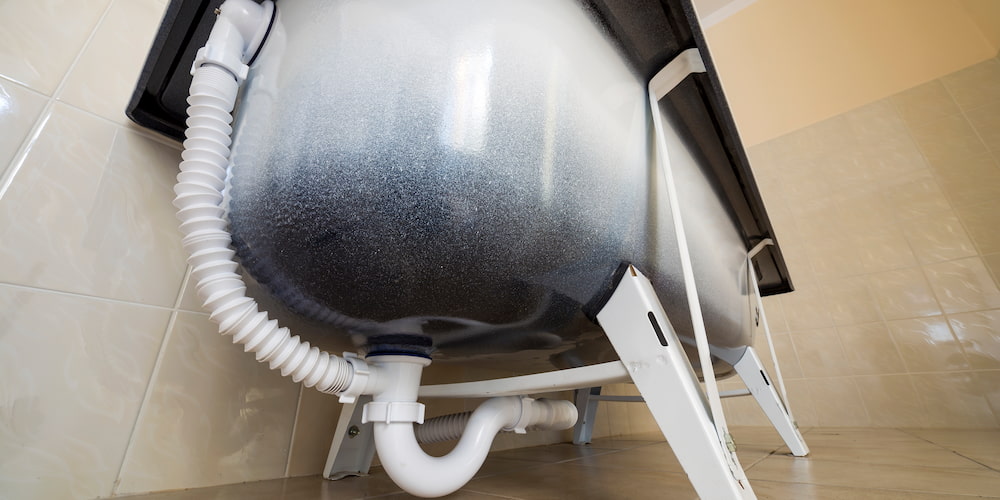
  • Loose waste connections: The waste outlet (drain) beneath the bath can shift, especially in homes where the floor settles or flexes. This leads to slow drips that might not be visible immediately.
  • Tap or mixer leaks: Faulty tap connections, loose washers, or a failing mixer can leak behind the wall or tub.
  • Cracked bathtub: Acrylic or fibreglass tubs can crack due to age or improper support. Even hairline fractures can allow water through.
  • Overflow pipe issues: If the overflow pipe is not properly connected, water may leak during high fill levels, especially when kids overfill the tub.

Signs of a leak under your bathtub

Signs of a leak under your bathtub

Some leaks are obvious, others take a while to become noticeable. Watch for these warning signs:

  • Water on the floor after using the bath
  • Damp patches or stains on ceilings or walls below the bathroom
  • Mould or mildew developing in unusual places
  • A persistent musty smell in the bathroom
  • Warped or soft flooring near the bath
  • Cracks appearing in tiles or grout due to moisture underneath

The key is to act early. If any of these symptoms appear, don’t wait for visible water damage before taking a closer look.

How to inspect and fix a bath leak

If you’re confident with DIY, you may be able to do a basic inspection. First, remove the bath panel (if possible) and dry the area thoroughly. Run water through the taps and waste and check for visible drips. Use a torch and mirror to get a good view of joints and seals.

Here’s a step-by-step process:

  1. Turn off water supply if you plan to work on pipes or taps
  2. Check the sealant and reseal any gaps or worn sections
  3. Test the waste and overflow connections by filling the bath and watching from below
  4. Inspect the taps and mixer for any drips or looseness
  5. Check the bath body for visible cracks or damage
  6. Re-tighten connections or replace faulty washers and seals

If the bath needs to be lifted or the leak is hidden behind walls, it’s best to contact a licensed plumber.

When to call a professional plumber

While small leaks caused by worn sealant or loose taps can sometimes be fixed yourself, more complex issues should be handled by an expert. Leaks from waste pipes or behind walls can cause extensive damage if done wrong.

You should call in a professional when:

  • You can’t locate the leak
  • Water is dripping into rooms below
  • The bath needs removing or lifting
  • Pipework needs replacing
  • You suspect multiple sources of leaks

Our team of plumbing and heating London professionals have the tools and experience to fix leaks quickly and cleanly, without unnecessary disruption.

Preventing future bath leaks

Once the leak is fixed, you’ll want to avoid it happening again. Here are a few tips to keep your bath in good condition:

  • Inspect and reseal the bath every few years with quality silicone
  • Avoid overfilling the bath, especially when children use it
  • Use a bath mat to reduce splashes and surface water
  • Check tap fittings occasionally and replace washers as needed
  • Lift the bath panel and inspect underneath once a year

These small checks can prevent major headaches later.

Final thoughts

A bath leaking from underneath is a problem you can’t afford to ignore. What starts as a small drip can quickly lead to mould, rot, and serious structural damage. Whether it’s a loose pipe or a cracked seal, finding and fixing the issue early is essential.

If you’ve spotted the signs and need professional help, don’t hesitate to get in touch. Our experienced plumbing and heating London team are ready to assist, offering honest advice, fast service, and lasting results.

Need a plumber in West London?

We provide quick and reliable bath leak repairs across West London. Whether it’s a seal, pipe, or something more hidden, we’ll find the cause and fix it properly. Contact us today to book a visit or request a quote.

Tel: 020 3561 4415

Email: info@westlondon-plumbing.co.uk

👉 Learn More About Our Boiler Services


References:

  1. Roto-Rooter – How to find and repair a bathtub leak
  2. Your Guy Drainage – How to fix a bathtub leak