

Water on the bathroom floor is never a good sign, especially if it keeps coming back. If you’ve noticed puddles around your bath after every use or damp patches below the ceiling downstairs, chances are you’re dealing with a leak under the bath.
This kind of problem might seem minor at first, but if left unresolved, it can cause damage to your flooring, walls, and even your home’s structure. In this post, we’ll cover the most common causes of a bath leaking underneath, how to spot the warning signs, and how to fix the issue effectively.
Why is my bathtub leaking?
A leak under the bathtub can happen for several reasons — from worn-out seals to faulty pipework. It’s usually not something that gets worse overnight, but the longer it’s ignored, the more damage it can cause. Water can seep into the floorboards, cause mould growth, and even affect your home’s insulation.
Depending on the age of your bathroom fittings and the type of installation, leaks may come from above or below the surface. If you’re unable to trace it easily, calling in a professional plumber is often the safest way forward.
Common causes of water leaking from under the bath
Identifying where the leak is coming from is the first step. Here are the most frequent culprits behind bath leaks:
- Worn or broken sealant: The silicone sealant around the edge of the bath can break down over time. Once it cracks or lifts, water can slip through during every bath or shower.
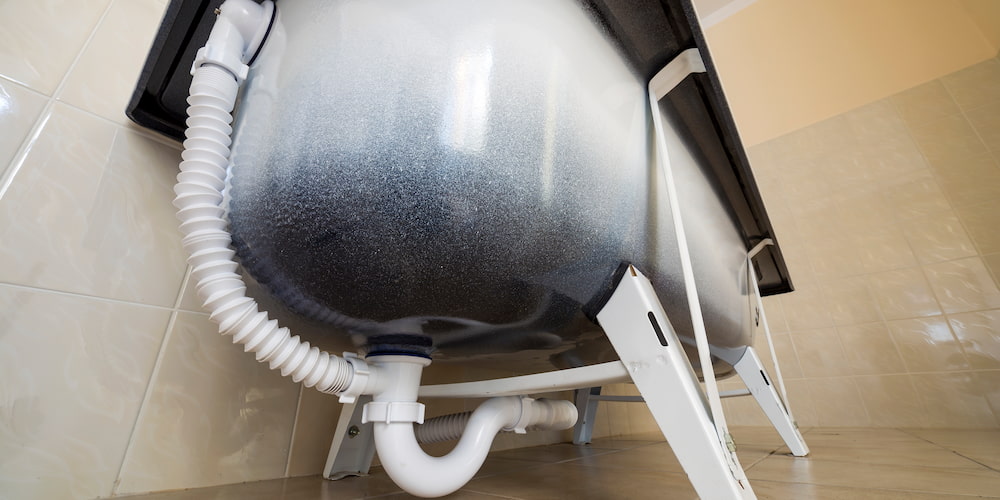
- Loose waste connections: The waste outlet (drain) beneath the bath can shift, especially in homes where the floor settles or flexes. This leads to slow drips that might not be visible immediately.
- Tap or mixer leaks: Faulty tap connections, loose washers, or a failing mixer can leak behind the wall or tub.
- Cracked bathtub: Acrylic or fibreglass tubs can crack due to age or improper support. Even hairline fractures can allow water through.
- Overflow pipe issues: If the overflow pipe is not properly connected, water may leak during high fill levels, especially when kids overfill the tub.
Signs of a leak under your bathtub
Some leaks are obvious, others take a while to become noticeable. Watch for these warning signs:
- Water on the floor after using the bath
- Damp patches or stains on ceilings or walls below the bathroom
- Mould or mildew developing in unusual places
- A persistent musty smell in the bathroom
- Warped or soft flooring near the bath
- Cracks appearing in tiles or grout due to moisture underneath
The key is to act early. If any of these symptoms appear, don’t wait for visible water damage before taking a closer look.
How to inspect and fix a bath leak
If you’re confident with DIY, you may be able to do a basic inspection. First, remove the bath panel (if possible) and dry the area thoroughly. Run water through the taps and waste and check for visible drips. Use a torch and mirror to get a good view of joints and seals.
Here’s a step-by-step process:
- Turn off water supply if you plan to work on pipes or taps
- Check the sealant and reseal any gaps or worn sections
- Test the waste and overflow connections by filling the bath and watching from below
- Inspect the taps and mixer for any drips or looseness
- Check the bath body for visible cracks or damage
- Re-tighten connections or replace faulty washers and seals
If the bath needs to be lifted or the leak is hidden behind walls, it’s best to contact a licensed plumber.
How to fix a leaking bath drain
The waste, the drain fitting under the plughole, is one of the most common sources of a leak under the bath. Water usually escapes where the plughole fitting meets the bath, or at a joint in the pipework below it.
- Find the drip. Remove the bath panel and dry everything. Run a little water into the bath, pull the plug and watch the plughole fitting, the trap and the waste pipe with a torch.
- Tighten the waste nuts. If water is coming from a joint, tighten the plastic nuts on the trap and waste pipe by hand. Do not overtighten them, as plastic threads crack easily.
- Reseal the plughole. If water escapes around the plughole itself, unscrew the plughole fitting, clean off the old sealant, replace the washer or apply fresh sealant, and refit it.
- Check the overflow. Fill the bath to just above the overflow and check the overflow fitting and its pipe. A worn overflow seal often causes leaks that only appear when the bath is full.
- Replace cracked parts. A cracked trap or waste pipe should be replaced rather than patched.
Let any new sealant cure for the time shown on the tube before you use the bath. If the drain still leaks, or you cannot reach the waste without lifting the bath, our leak detection team can find the source.
When to call a professional plumber
While small leaks caused by worn sealant or loose taps can sometimes be fixed yourself, more complex issues should be handled by an expert. Leaks from waste pipes or behind walls can cause extensive damage if done wrong.
You should call in a professional when:
- You can’t locate the leak
- Water is dripping into rooms below
- The bath needs removing or lifting
- Pipework needs replacing
- You suspect multiple sources of leaks
Our team of plumbing and heating London professionals have the tools and experience to fix leaks quickly and cleanly, without unnecessary disruption.
Preventing future bath leaks
Once the leak is fixed, you’ll want to avoid it happening again. Here are a few tips to keep your bath in good condition:
- Inspect and reseal the bath every few years with quality silicone
- Avoid overfilling the bath, especially when children use it
- Use a bath mat to reduce splashes and surface water
- Check tap fittings occasionally and replace washers as needed
- Lift the bath panel and inspect underneath once a year
These small checks can prevent major headaches later.
Final thoughts
A bath leaking from underneath is a problem you can’t afford to ignore. What starts as a small drip can quickly lead to mould, rot, and serious structural damage. Whether it’s a loose pipe or a cracked seal, finding and fixing the issue early is essential.
If you’ve spotted the signs and need professional help, don’t hesitate to get in touch. Our experienced plumbing and heating London team are ready to assist, offering honest advice, fast service, and lasting results.
Frequently asked questions
Why is water leaking from under my bath?
The most common causes are worn sealant around the edge of the bath, a loose waste connection under the plughole and a worn overflow seal. Cracked baths and leaking tap connections are less common.
Can I fix a leaking bath myself?
Often, yes. Resealing the edge of the bath, tightening the waste nuts and replacing a plughole washer are straightforward jobs. Leaks you cannot see, or that need the bath lifting, are best left to a plumber.
How do I find a leak under the bath?
Take off the bath panel, dry the area and run water through the taps, the plughole and the overflow in turn, watching for drips with a torch. If you still cannot find it, a leak detection visit will trace it.
Is a leaking bath an emergency?
If water is coming through the ceiling below, stop using the bath and turn off the water to it. A leak near electrics needs urgent attention. Our emergency plumbers can help.
Need a plumber in West London?
We provide quick and reliable bath leak repairs across West London. Whether it’s a seal, pipe, or something more hidden, we’ll find the cause and fix it properly. Contact us today to book a visit or request a quote.
Tel: 020 3561 4415
Email: info@westlondon-plumbing.co.uk
👉 Learn More About Our Boiler Services
References: