Category: Boiler Maintenance

Radiator Not Heating Up? Common Causes and How to Fix It

A radiator that won’t heat up is one of the most common heating complaints, and the good news is that the cause is usually easy to identify. Where the radiator is cold tells you a lot about what’s wrong. This guide runs through the most common reasons a radiator isn’t heating up and how to fix each one.

Start by checking where the radiator is cold

Before anything else, feel the radiator while the heating is on. Where it’s cold points straight to the likely cause:

  • Cold at the top, warm at the bottom: trapped air
  • Cold at the bottom, warm at the top: sludge build-up
  • Cold all over (but others are warm): a stuck valve or closed valve
  • Every radiator cold: a boiler, pump or system-wide issue

1. Trapped air (cold at the top)

If the radiator is warm at the bottom but cold at the top, air is trapped inside and stopping hot water from reaching the top. This is the easiest fix — you simply bleed the radiator to release the air. Follow our step-by-step guide on how to bleed a radiator, then check your boiler pressure afterwards and top it up if needed.

2. A stuck thermostatic radiator valve (TRV)

Each radiator usually has a thermostatic valve (the numbered dial). Over the summer, when the heating is off, the pin inside can stick in the closed position, so the radiator stays cold even when turned up. To check, unscrew the TRV head and look at the small pin underneath — gently moving it up and down with pliers will often free it. If the radiator warms up afterwards, that was the culprit.

3. Sludge build-up (cold at the bottom)

If the radiator is warm at the top but cold at the bottom, the problem is usually a build-up of sludge — rust and debris (magnetite) that settles at the base and blocks the flow of hot water. Bleeding won’t fix this. The system needs a chemical flush or a power flush, which is a job for a professional. Left untreated, sludge reduces the efficiency of your whole system and can damage the boiler and pump.

4. Closed or unbalanced valves

Check that both valves on the radiator are fully open — the TRV at one end and the lockshield valve (usually under a plastic cap) at the other. If a single radiator furthest from the boiler struggles to heat while those nearest run hot, your system may need balancing, which involves adjusting the lockshield valves so hot water is distributed evenly. A heating engineer can balance the system quickly.

5. A boiler or pump problem (all radiators cold)

If none of your radiators are heating up, the issue is more likely with the boiler or circulating pump than the radiators themselves. First, check the boiler is firing and that the pressure gauge reads around 1 to 1.5 bar — if it’s low, top it up, and if it’s high, see our guide on boiler pressure that’s too high. If the boiler is working but the radiators stay cold, the pump may have failed or seized, which needs a Gas Safe registered engineer.

When to call a professional

Bleeding a radiator and freeing a stuck TRV pin are safe DIY jobs. Call a heating engineer if the water from the radiators is dark and dirty (sludge), if radiators need balancing, if the pump has failed, or if no radiators are heating at all. Our heating team can diagnose and fix the problem, and flush the system if needed, to get your heating running efficiently again.

Frequently asked questions

Why is only one radiator not heating up?

A single cold radiator usually points to trapped air, a stuck TRV, or a closed valve on that radiator. Feel where it’s cold to narrow it down — cold at the top means air, cold at the bottom means sludge.

Why are all my radiators cold but the boiler is on?

This usually indicates a circulation problem, such as a failed pump or a system-wide airlock, rather than a fault with the radiators. It’s best checked by an engineer.

Can I fix a radiator that won’t heat up myself?

Often, yes. Bleeding the radiator or freeing a stuck TRV pin can be done safely at home. Sludge removal, balancing and pump faults should be left to a professional.

Need help with your heating in West London?

If your radiator still won’t heat up after these checks, it’s worth having a professional take a look before the problem spreads to the rest of your system. Our Gas Safe registered engineers provide fast plumbing and heating services across West London, including radiator balancing, power flushing and boiler repairs.

Tel: 020 3561 4415

Contact us today to book a visit or request a free quote.
How to Bleed a Radiator: A Simple Step-by-Step Guide

If one or more of your radiators are cold at the top but warm at the bottom, trapped air is usually to blame. Bleeding your radiators releases that air so hot water can circulate properly again — and it’s one of the simplest bits of home heating maintenance you can do yourself. This guide walks you through how to bleed a radiator safely, step by step.

What does bleeding a radiator do?

Over time, air becomes trapped inside your central heating system. Because air rises, it collects at the top of your radiators and stops hot water from filling that section. The result is a radiator that’s warm at the bottom and cold at the top, meaning your heating works harder, your rooms take longer to warm up, and your energy bills creep up. Bleeding simply lets that trapped air escape.

Signs your radiators need bleeding

  • The radiator is cold at the top but warm at the bottom
  • Rooms take a long time to heat up
  • You hear gurgling or rattling noises from the radiators
  • Some radiators stay cold while others get hot
  • Damp or mould appearing because rooms aren’t heating evenly

What you’ll need

  • A radiator bleed key (available cheaply from any DIY shop) or a flat-head screwdriver for newer valves
  • A cloth or old towel
  • A small container to catch drips

How to bleed a radiator: step by step

  1. Turn your heating on fully so the system reaches pressure and you can feel which radiators have cold spots.
  2. Turn the heating off and let the radiators cool. Never bleed a hot radiator — you risk scalding yourself with hot water.
  3. Find the bleed valve at the top corner of the radiator. Hold your cloth underneath and fit the bleed key onto the square valve.
  4. Turn the key slowly anti-clockwise, about a quarter to half a turn. You’ll hear a hissing sound as the trapped air escapes.
  5. Wait for the hiss to stop. When a steady trickle of water comes out instead of air, the radiator is fully bled.
  6. Close the valve by turning the key clockwise. Don’t overtighten it — snug is enough.
  7. Repeat for each radiator, working from the ground floor up, then the upstairs radiators.

Check your boiler pressure afterwards

Bleeding radiators releases water as well as air, which can lower the pressure in your system. Once you’ve finished, check the pressure gauge on your boiler — it should sit at around 1 to 1.5 bar when the heating is cold. If it has dropped below 1 bar, you’ll need to top it up using the filling loop. If instead you find your boiler pressure is too high, we cover the causes and fixes in a separate guide.

How often should you bleed your radiators?

For most homes, bleeding your radiators once a year — ideally at the start of autumn before you rely on the heating — is enough. If you notice cold spots returning quickly after bleeding, it can point to a bigger issue such as a build-up of sludge or a circulation problem, which is worth having a professional look at.

When to call a professional

Bleeding radiators is a safe DIY job, but call a heating engineer if radiators stay cold after bleeding, if you keep having to bleed the same radiator, if the water that comes out is very dark or dirty (a sign of sludge), or if you spot leaks around the valves. Our plumbing and heating team can flush the system, balance your radiators, and get your heating running efficiently again.

Frequently asked questions

Should the heating be on or off when bleeding a radiator?

Turn the heating off and let the radiators cool before bleeding them. Bleeding a hot radiator can spray out scalding water.

Do I need to bleed radiators upstairs or downstairs first?

Start with the downstairs radiators, then move upstairs. On each floor, begin with the radiator furthest from the boiler.

Why is my radiator still cold after bleeding?

If a radiator is cold at the bottom rather than the top, the problem is usually sludge build-up rather than air, and the system may need a power flush. If it’s cold all over, check the valves are open. Persistent cold radiators are worth a professional inspection — see our full guide on why a radiator is not heating up.

Need help with your heating in West London?

If your radiators or boiler still aren’t behaving after trying the steps above, our Gas Safe registered engineers can help. We provide fast, reliable plumbing and heating services across West London, from radiator and boiler repairs to full system checks.

Tel: 020 3561 4415

Contact us today to book a visit or request a free quote.
Why Spring Is the Best Time to Book a Boiler Service in London

West London Plumbing Ltd

Ask most homeowners when they last had their boiler serviced and the answer tends to follow a pattern. Either it was done in September or October before the cold weather arrived, or it has not been done in a while and there is a vague intention to sort it out before next winter. Both approaches are understandable, but neither is actually the best way to manage a boiler.

Spring is the smarter time to book. Not because of any technical requirement tied to the season, but because of the practical advantages it offers and what a properly timed service actually protects. This post explains the reasoning and what a Gas Safe engineer looks for during an annual boiler service in West London.

What an Annual Boiler Service Actually Involves

There is a widespread misconception that a boiler service is something that only matters when the boiler is showing signs of trouble. In reality, a service is a preventative visit, not a reactive one. The point is to identify small issues before they become faults, and to keep the boiler running at the efficiency and safety level it was designed to achieve.

During a standard service, a Gas Safe registered engineer will remove the boiler casing and inspect the internal components. The heat exchanger, burner, ignition electrodes, flue, seals, and controls are all checked. The engineer will clean any components where build-up has occurred, test the gas pressure and flow rate, verify that the safety controls are working correctly, and confirm that combustion is performing within the expected parameters.

Any signs of wear, corrosion, or deterioration are noted. Minor issues can often be addressed on the same visit. More significant problems will be flagged so the homeowner can make an informed decision about repair or, in some cases, replacement before the next heating season begins.

The whole process typically takes between 45 minutes and an hour and a half, depending on the age and condition of the boiler.

The Problem With Servicing in Autumn

Autumn servicing has become the default for most households simply because it feels like the logical thing to do before the heating goes back on. The logic makes sense on the surface. But in practice, it creates a concentration of demand that works against homeowners.

By September and October, engineers across West London are busy. Boilers that have been sitting idle through summer start showing faults as soon as they are needed again, and the combination of reactive repairs and pre-winter service bookings stretches availability considerably. Waiting times increase, appointments become harder to fit around work and family commitments, and the urgency of the autumn period can mean less time is available for a thorough job.

There is also a timing issue with any faults that are found. A service carried out in October that identifies a component needing replacement leaves very little time to source parts and complete the repair before the heating season is underway. A service carried out in March or April, on the other hand, leaves a comfortable window of several months to deal with anything that comes up without any pressure.

Why Spring Servicing Makes More Practical Sense

The end of the heating season in spring is actually the ideal moment to assess the boiler’s condition, for a straightforward reason: the boiler has just completed its most demanding period of the year. Any wear that has accumulated over winter will be visible to an engineer now in a way that it would not be after several months of summer inactivity.

Booking a service in March or April means the boiler is inspected while the evidence of the winter’s work is still fresh. Components that are beginning to show fatigue after months of daily use can be identified and addressed before they deteriorate further over the summer and become a fault in November. The boiler then sits in good condition through the warmer months and comes back into full use in autumn already ve

What to do when your boiler breaks down: emergency repair guide for London homeowners

What to do when your boiler breaks down

A boiler breaking down is rarely convenient. It often happens during colder months, late at night, or just when you need hot water the most.

When it does happen, the first few steps you take can make a difference. Acting quickly helps protect your system, reduces risk, and gets things back to normal faster.

This guide explains what to do, what to avoid, and when it’s time to call for emergency boiler repairs in London.

First step: stay calm and check the basics

Before assuming the worst, it’s worth checking a few simple things.

Boiler issues are not always major faults. Sometimes the cause is something small that can be resolved quickly.

Take a moment to check:

  • Is your thermostat set correctly?
  • Has the power supply been interrupted?
  • Is your boiler showing an error code?
  • Has the pressure dropped too low?

Modern boilers often display fault codes that point to the issue. If you have the manual, it can help you understand whether it’s something minor or something that needs professional attention.

When a quick fix is not enough

Some issues are easy to spot but not safe to fix yourself.

For example, low pressure can sometimes be topped up, but recurring pressure loss usually indicates a deeper problem. Strange noises, leaks or a complete shutdown should not be ignored.

You may notice:

  • No heating or hot water
  • Unusual banging or whistling sounds
  • Water leaking from the unit
  • A persistent fault code that won’t reset

At this stage, it’s best not to attempt further fixes. Boilers involve gas and high-pressure systems, so safety should always come first.

When to call for emergency boiler repairs in London

There are situations where waiting is not a good option.

If your boiler has completely stopped working, especially during winter, or if you suspect a safety issue, it’s time to call a professional.

A 24 hour boiler repair service is designed for exactly these scenarios. It allows you to get help quickly, regardless of the time of day.

Emergency support is particularly important if:

  • You have no heating in cold conditions
  • There is a suspected gas issue
  • Water is leaking and could damage your property
  • The boiler repeatedly shuts down

In these cases, fast response matters more than anything else.

What to expect from a 24 hour boiler repair service

Many people are unsure what happens when they call an emergency engineer.

In most cases, the process is straightforward. The engineer will aim to diagnose the issue quickly and restore heating if possible.

A typical visit includes:

  • Initial inspection and fault diagnosis
  • Safety checks on the boiler and surrounding system
  • Immediate repair if parts and access allow
  • Advice on next steps if further work is needed

Some problems can be resolved on the spot, while others may require parts or a follow-up visit. The key advantage of emergency services is that the issue is assessed quickly, and the system is made safe.

Avoid making the situation worse

When a boiler stops working, it’s tempting to try multiple fixes.

However, repeated resetting, adjusting internal components, or attempting repairs without experience can lead to more damage.

It’s best to avoid:

  • Opening the boiler casing
  • Repeatedly restarting the system
  • Ignoring warning signs like leaks or smells
  • Using the system if you suspect a fault

A cautious approach reduces the risk of turning a manageable repair into a larger issue.

Why regular maintenance still matters

Emergency repairs are sometimes unavoidable, but many breakdowns can be prevented.

Regular servicing helps identify wear and tear before it becomes a serious problem. It also ensures your system is running efficiently and safely.

An annual boiler service london check can:

  • Detect early faults
  • Improve energy efficiency
  • Extend the lifespan of your boiler
  • Reduce the likelihood of unexpected breakdowns

Homeowners who maintain their boilers regularly tend to experience fewer emergency callouts.

Common causes of sudden boiler breakdowns

Boilers often fail without warning, but there are usually underlying reasons.

Some of the most common causes include:

  • Pressure issues within the system
  • Frozen condensate pipes during winter
  • Worn or faulty internal components
  • Airlocks or circulation problems
  • Lack of regular maintenance

Understanding these causes can help you spot early warning signs before a full breakdown occurs.

How quickly can your heating be restored?

One of the main concerns during a breakdown is how long it will take to fix.

Response time depends on the issue, but many 24 hour boiler repair services aim to reach you within a few hours.

Simple faults may be resolved during the first visit. More complex problems may require additional parts, but the system is usually made safe and stabilised quickly.

The priority is always to restore heating as soon as possible while ensuring everything is working safely.

Planning ahead for future emergencies

After dealing with a breakdown, many homeowners look for ways to avoid the same situation again.

A few practical steps can make a difference:

  • Keep your boiler serviced annually
  • Take note of any unusual sounds or behaviour
  • Address small issues early before they escalate
  • Know who to call in an emergency

Having a trusted local engineer ready can save valuable time when something goes wrong.

Getting your heating back on track

A boiler breakdown is never ideal, but it does not have to turn into a major disruption.

By staying calm, checking the basics, and knowing when to call for professional help, you can reduce downtime and avoid unnecessary damage.

Emergency boiler repairs in London are there to provide quick, reliable support when you need it most. Acting early often leads to better outcomes.

Need emergency boiler repairs in London?

If your boiler has stopped working or you need urgent help, our experienced team is ready to respond.

We provide fast and reliable support across London, including full diagnostics and same-day repairs where possible.

Book your boiler service london today or contact us for immediate 24 hour boiler repair assistance.

How to know your boiler needs repair

Boiler system setup for repair

A working boiler is something most homeowners don’t think about — until it stops doing its job. Whether it’s providing heat, hot water, or both, your boiler plays a critical role in your comfort and safety, especially during colder months.

So how do you know when something’s wrong? In this guide, we’ll explain the key warning signs that your boiler needs repair, what causes common issues, and when it’s time to call in the experts.


Why timely boiler repairs matter

Delaying boiler repairs can lead to more serious damage and higher costs down the line. Even minor issues can affect the system’s efficiency, drive up your energy bills, or pose a risk to your household’s safety.

A faulty boiler can also lead to:

  • Loss of heating or hot water
  • Leaks and water damage
  • Carbon monoxide risks in severe cases
  • Pressure damage to pipes and radiators
  • Voiding your boiler warranty if not serviced regularly

Spotting early signs and getting repairs done quickly helps prevent emergencies and ensures your system runs safely and efficiently.


Signs your boiler may need repair

There are several clues that your boiler is no longer performing as it should. If you notice one or more of the following, it’s time to get it checked:

  1. Unusual noises
    Boilers should run quietly. If yours is making banging, gurgling, whistling, or clunking sounds, it may be due to air in the system, a failing pump, or limescale build-up (known as “kettling”).
  2. Loss of heat or hot water
    If radiators are cold or your water isn’t warming up properly, the boiler might be struggling to operate at full capacity. This could be due to pressure issues, a faulty thermostat, or a broken valve.
  3. Pilot light keeps going out
    On older boilers with a pilot light, constant flickering or going out can signal a deeper fault with the thermocouple or gas supply.
  4. Leaking or dripping
    Any signs of water leaking from the boiler itself or connected pipework should be addressed immediately. Even small leaks can damage your system or surrounding areas.
  5. Radiators heating unevenly
    If some radiators stay cold or take a long time to heat up, the problem may lie within your boiler’s circulation or pressure settings.
  6. Low pressure
    Boilers need consistent pressure to work properly. If your gauge shows pressure below 1 bar frequently, the system may have a leak or need repressurising.
  7. Increased energy bills
    If your bills are climbing without explanation, your boiler might be running inefficiently. Older or struggling units use more energy to do the same work.

What causes boiler problems?

Boiler issues can develop gradually or suddenly depending on several factors:<

  • Lack of regular servicing
  • Ageing components and general wear
  • Poor water quality causing scale build-up
  • Air locks or trapped air in the system
  • Faulty thermostats or controls
  • Pressure issues or leaks

Regular servicing and inspection can catch many of these problems before they lead to failure.


Can you repair a boiler yourself?

While bleeding a radiator or topping up pressure may be safe for some homeowners, most boiler repairs require a Gas Safe registered engineer. Modern boilers are complex, and DIY repairs can not only void warranties but also risk your safety.

If you’re not sure what’s wrong or your boiler has shut down completely, don’t take chances.

We recommend speaking to a trusted boiler inspect company to diagnose and repair the issue properly.


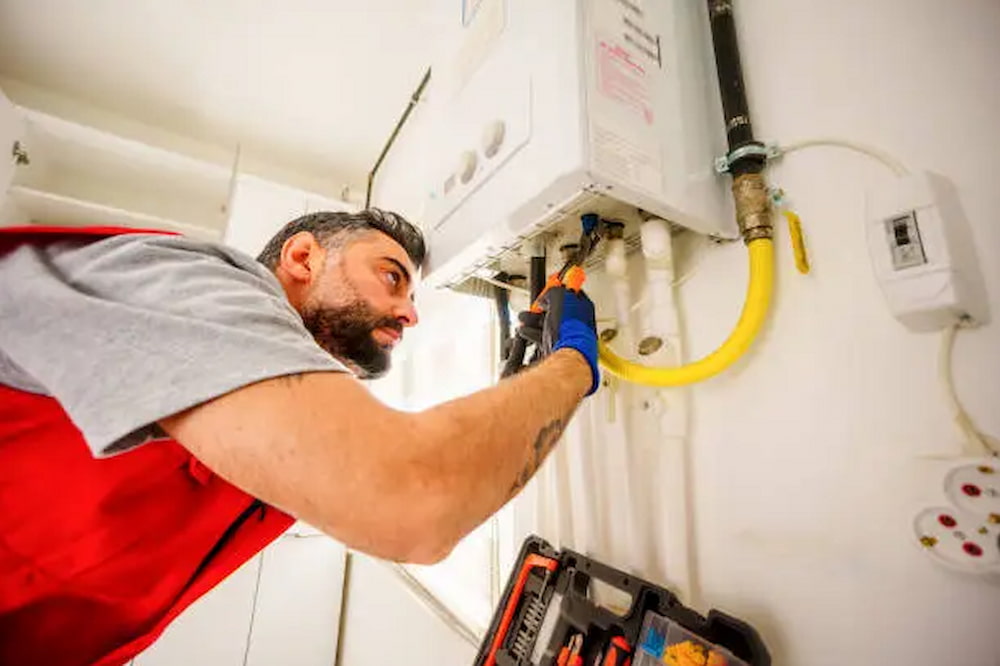
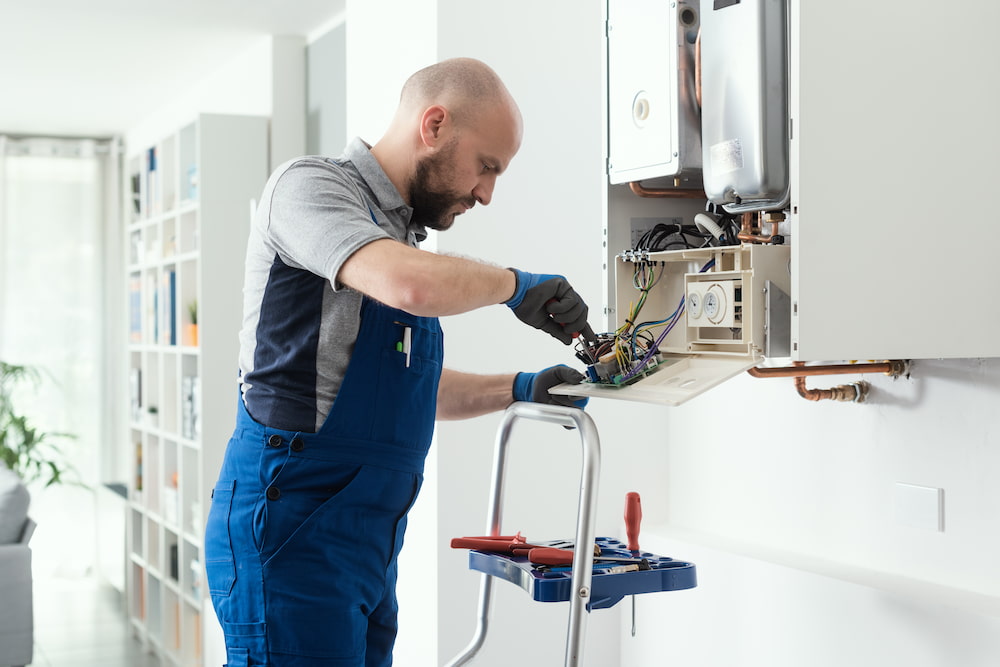
Engineer doing boiler repair work

When to replace instead of repair

In some cases, repairing an old or inefficient boiler doesn’t make financial sense. You may want to consider replacement if:

  • Your boiler is over 10–15 years old
  • It breaks down frequently
  • Replacement parts are hard to find
  • It’s no longer energy-efficient
  • Repair costs are close to the price of a new boiler

A qualified engineer can assess your system and help you decide what’s best.


Keeping your boiler in top shape

You can avoid most boiler issues by booking an annual service. This allows engineers to inspect and clean parts, test safety controls, and keep everything running as it should.

Other useful tips include:

  • Bleed radiators once a year to remove trapped air
  • Check your pressure gauge monthly
  • Listen for odd noises during operation
  • Keep the area around your boiler clear and dry
  • Monitor your heating performance during cold spells

A little prevention goes a long way in extending the lifespan of your boiler.


Final thoughts

Knowing when your boiler needs repair can save you from unexpected breakdowns, costly damage, or even safety risks. Whether it’s strange noises, uneven heating, or rising energy bills, small signs often point to bigger issues.

For expert diagnosis and fast, reliable service, trust a certified boiler inspect company like ours. We’ll keep your system running safely and efficiently — so you’re never left in the cold.


Need a boiler check in West London?

We provide professional boiler inspections and repairs throughout West London. Whether you need a one-off fix or regular servicing, our Gas Safe engineers are here to help.

Book your boiler inspection with our trusted team<

A Guide to Different Types of Boilers in the UK

Guide to Different Types of Boilers in the UK


When it comes to heating your home, choosing the right boiler is essential. It’s not just about ensuring your home stays warm, but also about energy efficiency, cost-effectiveness, and meeting the specific needs of your household. In the UK, there are several types of boilers available and boiler installation service London, each suited to different homes and heating requirements. Let’s explore the main types of boilers and their features.

1. Combi Boilers

Combi boilers, or combination boilers, are one of the most popular choices in UK homes. They provide both central heating and hot water on demand, eliminating the need for a separate water tank or cylinder.

Key Features:

  • Compact and space-saving design.
  • Instant hot water without waiting for a tank to heat up.
  • Ideal for smaller homes or those with limited space.
  • Not suitable for homes with high hot water demand or multiple bathrooms.


2. System Boilers

A system boiler installation requires a hot water cylinder but doesn’t need a separate cold water tank. This makes them a great choice for homes with higher hot water needs.

Key Features:

  • Provides a constant supply of hot water to multiple taps simultaneously.
  • More efficient than traditional boilers as key components are built into the unit.
  • Requires space for a hot water cylinder, so not ideal for very small properties.


3. Conventional Boilers (Regular or Heat-Only Boilers)

Conventional boilers are the traditional type of boiler found in older homes. They work with both a hot water cylinder and a cold water storage tank.

Key Features:

  • Perfect for homes with old radiator systems that may not handle high pressure.
  • Can supply hot water to multiple bathrooms at once.
  • Requires significant space for both tanks and the boiler itself.
  • Less efficient compared to modern alternatives like combi and system boilers.


4. Electric Boilers

Electric boilers are becoming increasingly popular, especially in areas where gas supply isn’t available. They use electricity to heat water and provide central heating.

Key Features:

  • Compact and easy to install.
  • No need for gas supply, making them ideal for off-grid properties.
  • Environmentally friendly when paired with renewable energy sources.
  • Can be more expensive to run due to electricity costs.


5. Oil Boilers

Oil boilers are common in rural areas where gas mains aren’t accessible. They use oil stored in a tank to heat water and provide central heating.

Key Features:

  • Suitable for off-grid homes.
  • Requires regular oil deliveries and storage space for the tank.
  • Can be more costly to run compared to gas boilers but offers good efficiency.

find the right boiler installation service london

Choosing the Right Boiler for Your Home

When deciding on the best boiler for your home, consider the following factors:

  • Size of Your Property: Smaller homes may benefit from a combi boiler, while larger properties with multiple bathrooms might need a system or conventional boiler.
  • Hot Water Demand: If your household uses a lot of hot water simultaneously, a system or conventional boiler is likely more suitable than a combi boiler.
  • Energy Efficiency: Modern boilers are highly efficient, but it’s worth comparing models to find one that will save you money on energy bills.
  • Fuel Type: Depending on your location, you may need an oil or electric boiler if gas isn’t an option.

Understanding the different types of boilers available in the UK can help you make an informed decision when upgrading or replacing your heating system. Whether you’re looking for efficiency, space-saving solutions, or a system that meets high hot water demands, there’s a boiler out there to suit your needs perfectly. Always consult a professional heating engineer to determine the best option for your home.


Get Started with Your New Boiler Today!

Choosing the right boiler installation service London is a crucial step towards ensuring your home is warm and energy-efficient. At West London Plumbing, we are here to help you every step of the way from selecting the perfect boiler for your needs to professional installation by our certified engineers.


Ready to upgrade your heating system?

Contact Us Today! Visit our website to learn more about our boiler installation services and to schedule a consultation with one of our experts.

Tel: 020 3561 4415

Email: info@westlondon-plumbing.co.uk

👉 Learn More About Our Boiler Services

Don’t wait until winter arrives, ensure your home is prepared with a reliable and efficient heating solution. Reach out to us now!